• The meeting discusses the positive outlook for the Egyptian economy, the transformation of the growth structure toward employment-supporting sectors, and future prospects for investment and manufacturing.
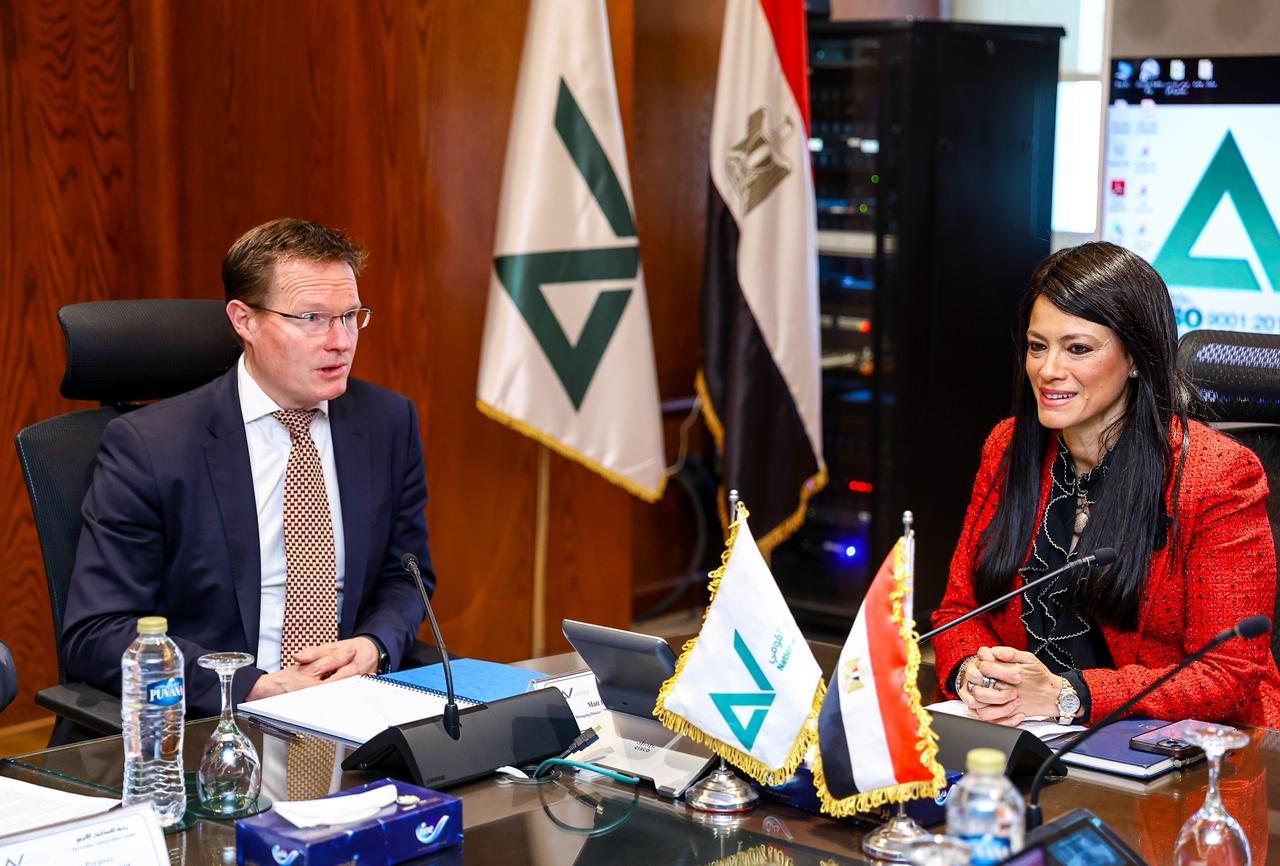
H.E. Dr. Rania Al-Mashat, Minister of Planning, Economic Development and International Cooperation, received a delegation from Moody’s credit rating agency, headed by Mr. Matt Robinson, Associate Managing Director of Sovereign Risk for the Middle East and Africa.
The meeting reviewed the targets of “Egypt’s Narrative for Comprehensive Development,” aimed at achieving high and sustainable, private-sector-led economic growth and enhancing competitiveness and productivity, in addition to presenting recent developments and positive indicators of the Egyptian economy.
During the meeting, H.E. Dr. Al-Mashat highlighted the progress of Egypt’s economic and structural reform path since March 2024, as well as the state’s efforts to strengthen macroeconomic stability through disciplined fiscal and monetary policies and the governance of public investments. These efforts have helped consolidate economic stability and overcome many challenges.
H.E. Dr. Al-Mashat emphasized that the state is currently moving forward with the implementation of the National Structural Reform Program to further entrench stability, improve the business environment, and create a more attractive investment climate.
H.E. Dr. Al-Mashat pointed out that the state has launched “Egypt’s Narrative for Comprehensive Development,” which integrates Egypt Vision 2030 with updated sectoral strategies. The narrative aims to transition toward an economic model that intensifies support for human development to improve quality of life, with greater focus on higher-productivity sectors and those more capable of accessing export markets, leveraging the advanced infrastructure that has been developed. It also redefines the role of the state in the economy in a way that enhances the competitiveness of the Egyptian economy and stimulates private-sector participation, as a continuation of the economic reform path and the consolidation of macroeconomic stability.
H.E. Dr. Al-Mashat underscored that the government is working to maximize returns on infrastructure investments implemented over recent years by improving institutional efficiency and encouraging private-sector participation, noting that economic stability and structural reforms are complementary tracks that reinforce sustainable growth.
H.E. Dr. Al-Mashat mentioned the recent positive improvement in growth indicators, as well as the structural shift in growth sources toward non-oil manufacturing, tourism, and information and communications technology. She noted that these indicators were achieved despite tensions that led to a contraction in Suez Canal activity, as well as a decline in the extractive and petroleum sector. Dr. Al-Mashat also stated that the state aims to diversify sources of growth and increase the economy’s productive capacity.
H.E. Dr. Al-Mashat reiterated that there has been a clear shift in the role of the state from competitor to regulator and investment enabler, contributing to the attraction of foreign direct investment and the expansion of partnerships with the private sector. She noted that more than USD 17 billion in concessional development financing has been directed to support private-sector empowerment since 2020.
H.E. Dr. Al-Mashat further referred to the state’s efforts to expand the export base and focus on tradable sectors, particularly manufacturing, modern agriculture, and information technology, reviewing Egypt’s progress in the Economic Complexity Outlook Index, which reflects the Egyptian economy’s ability to diversify and enter higher value-added products.
In the energy sector, the Minister reaffirmed that the green transition represents a structural driver of growth, noting that Egypt is on a clear path to reach 42% renewable energy by 2030. She highlighted the success of the country platform of the “NWFE” program in mobilizing more than USD 4.5 billion to finance private-sector renewable energy projects with a capacity of 5.2 gigawatts, out of a total target of 10 gigawatts under the program.
Regarding growth expectations, H.E. Dr. Al-Mashat stated that real GDP growth is expected to have recorded around 5% in the previous fiscal year.
With respect to structural reforms, H.E. Minister Al-Mashat reviewed a package of institutional and economic reforms, including entrenching a flexible exchange rate regime, advancing toward inflation targeting, strengthening the state ownership policy through a legislative framework governing the management of public assets, and expanding social protection coverage to bolster resilience to shocks without compromising reform objectives.
At the conclusion of the meeting, H.E. Dr. Al-Mashat reaffirmed the government’s commitment to improving the quality of growth, not merely its rates, through boosting transparency, fiscal discipline, and productivity.