Dr. Rania Al-Mashat: The adoption of the State-Owned Enterprises Law constitutes one of the key structural reforms to empower the private sector and improve the business environment
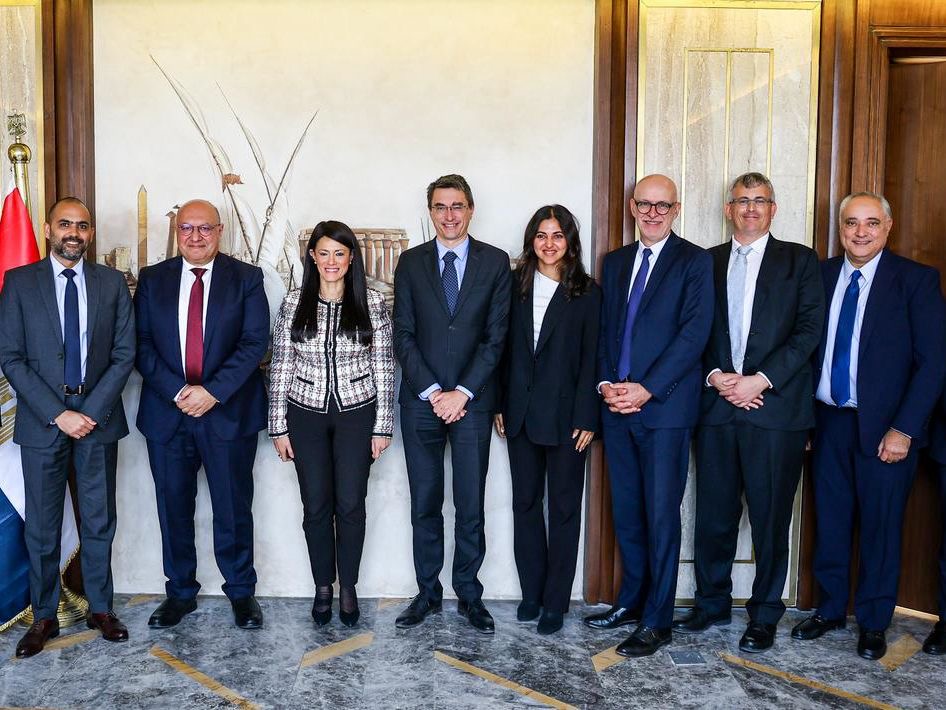
H.E.Dr. Rania Al-Mashat, Minister of Planning, Economic Development and International Cooperation, received a delegation from the World Bank, headed by Mr. Stephane Guimbert, the World Bank's Country Director for Egypt, Yemen, and Djibouti, and Cheikh Oumar Sylla, Regional Director of the International Finance Corporation for North Africa. H.E. held a meeting with the participation of Dr. Hashem El-Sayed, Assistant Prime Minister and Chief Executive Officer of the State-Owned Enterprises Unit (via video), and Dr. Ashraf Shoukry, Deputy Head of the Unit, to discuss ways to support the State-Owned Enterprises Inventory, Monitoring and Regulation Unit in activating its executive role in line with international best practices.
During the meeting, Dr. Ashraf Shoukry, Deputy Head of the State-Owned Enterprises Restructuring Unit, reviewed the Unit’s role in accordance with Law No. 170 of 2025, regulating certain provisions related to the State’s ownership in companies it owns or contributes to. The unit works to develop regulatory programs for these companies and monitor their implementation through specific and binding time frames, thereby supporting efforts to implement the state ownership policy document and promoting private sector participation, as well as proposing the regulatory and legal frameworks necessary to improve the performance of these companies.
The meeting also discussed avenues for technical cooperation with the World Bank to strengthen the tasks of the State-Owned Enterprises Restructuring Unit through the sharing of international experiences in the governance of state-owned enterprises, as well as contributing to raising the efficiency of the Unit’s technical staff. Proposals for cooperation to support the implementation of the State Ownership Policy Document were also discussed.
For her part, the Minister of Planning, Economic Development and International Cooperation affirmed that through “Egypt’s Narrative for Comprehensive Development,” to redefine the role of the State in the economy and empower the private sector, so that the State gradually transforms into a regulator and enabler that sets the overall framework and provides a conducive environment for private sector investments. H.E. explained that within the framework of implementing this vision, the tools of three main entities are integrated: the State-Owned Enterprises Unit affiliated with the Cabinet, the Sovereign Fund of Egypt, and the Government IPO Unit. She further noted that the State Ownership Policy Document constitutes the main reference determining the framework of the State’s intervention across various sectors.
H.E. pointed out that Egypt is the first country in the region to adopt a State Ownership Policy Document, and has recently approved Law No. 170 of 2025 on State-Owned Enterprises, which represents one of the key measures within the National Structural Reforms Program to empower the private sector and improve the business environment. This reflects the significant importance the Government attaches to reforming this sector and constitutes an important institutional development in the management of State assets.
H.E. stated that state-owned enterprises in Egypt play a pivotal role in the national economy, particularly in many strategic sectors.
The Minister added that Egypt launched the State Ownership Policy Document in 2022 with the aim of redefining the role of the State in economic activity by reducing the State’s presence in competitive sectors, enhancing governance and transparency, encouraging the maximization of returns from assets, and increasing private sector participation. That the State Ownership Policy Document is currently being updated in accordance with developments and changes that have taken place over the past period.
H.E. emphasized that the State Ownership Policy Document and the State-Owned Enterprises Law constitute an integrated strategic framework for managing this sector, aiming to improve governance and transparency, raise performance efficiency, achieve a level playing field in the market, and expand partnerships with the private sector.