● We are moving forward with the implementation of the structural reform program in cooperation with more than 40 national entities to implement over 430 measures across various sectors.
● Agreements have been reached on concessional financing worth USD 9.5 billion to support the budget during the 2023–2026 period, contributing to lower debt costs, longer maturities, and reduced short-term pressures.
● Our engagement with the international community benefits not only the government but also the private sector, which gains significantly through concessional financing, technical assistance, and direct investments.
● Full governance and transparency in implementing structural reforms through clear timelines and a unified reform matrix implemented by various government entities.
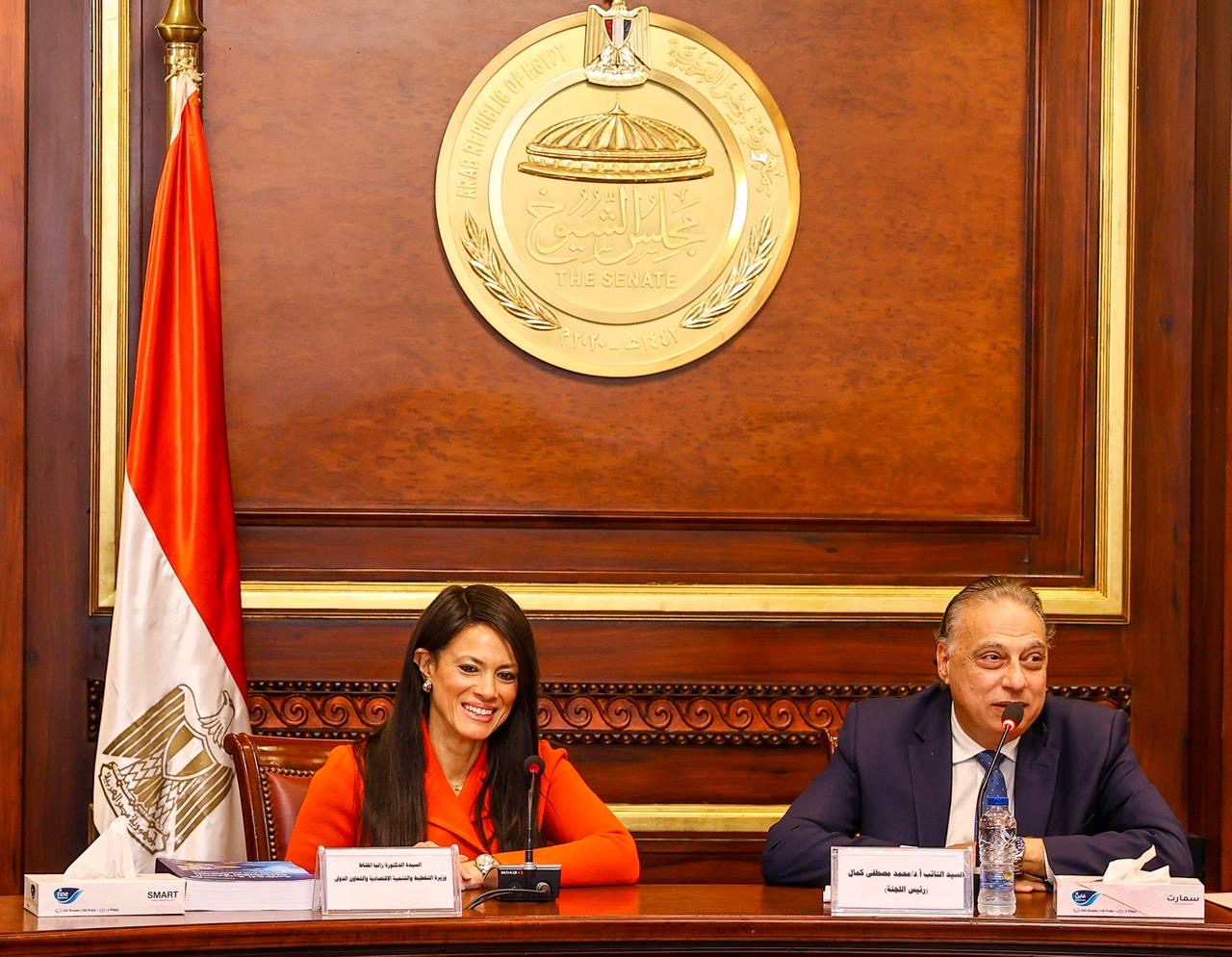
Dr. Rania Al-Mashat, Minister of Planning, Economic Development & International Cooperation, reviewed the progress made in implementing the National Structural Reform Program, which the State is pursuing to unlock the full potential of the Egyptian economy. She explained that the program is built around three main pillars: strengthening macroeconomic stability, enhancing economic competitiveness and improving the business environment, and supporting the transition to a green economy. This came during her meeting with members of the Senate’s Foreign Affairs Committee at the start of the new parliamentary session.
Dr. Al-Mashat stressed that there will be no reversal of economic reform policies aimed at consolidating stability, preserving the gains achieved, and transitioning to a new phase focused on boosting production, investment, and exports. She noted that structural reform policies and measures are formulated in coordination with relevant ministries and authorities, in alignment with sectoral strategies.
She stated that the program is governed by clearly defined timelines and is being implemented under the supervision of the Ministry in coordination with more than 40 national entities, ensuring greater policy effectiveness. She added that the program includes more than 430 measures and policies across various sectors, including tax and trade reforms, governance of public investments, social protection, enhancing private-sector participation, supporting labor markets and decent job creation, electricity and renewable energy, support for innovation and startups, strengthening industrial competitiveness, among others.
She further noted that the implementation of structural reforms is governed by full transparency and accountability through a unified reform matrix with clear timelines, executed by various government entities to safeguard the trajectory of economic reform. She highlighted that, through strong relationships with development partners and international financial institutions, the Ministry has mobilized concessional financing to support the budget and reinforce economic stability.
Dr. Al-Mashat explained that total concessional financing for budget support during the 2023–2026 period amounts to approximately USD 9.5 billion from development partners, including the European Union, the World Bank, the African Development Bank, the Asian Infrastructure Investment Bank, the French Development Agency, and the Japan International Cooperation Agency. She emphasized that this financing helps reduce the cost of debt and extend its maturity, given its concessional terms and longer tenors compared to financing from international markets.
She added that the ongoing structural reforms are expected to contribute to increasing GDP in the coming years and maintaining the momentum of economic reform. In a related context, she noted that Egypt’s relations with the international community benefit not only the government but also the private sector through access to concessional financing, technical assistance, and direct investments.
Dr. Al-Mashat concluded by stressing that economic stability enables the government to implement further reforms, and that continuing reforms, in turn, reinforces stability and supports efforts to achieve sustainable economic development. Accordingly, the State remains committed to maintaining disciplined fiscal and monetary policies and continuing the reform agenda.