• H.E. Dr. Rania Al-Mashat: Nuclear energy represents a key pillar for the transition to a green economy in Africa
• El Dabaa project is a model for comprehensive development, and Egypt adopts an integrated vision to diversify its renewable energy sources
• Egypt’s Narrative for Comprehensive Development: Reforms for Growth, Jobs & Resilience aims to increase the contribution of renewable energy to 42% by 2030 and raise the energy sector’s contribution to GDP to 9.5%
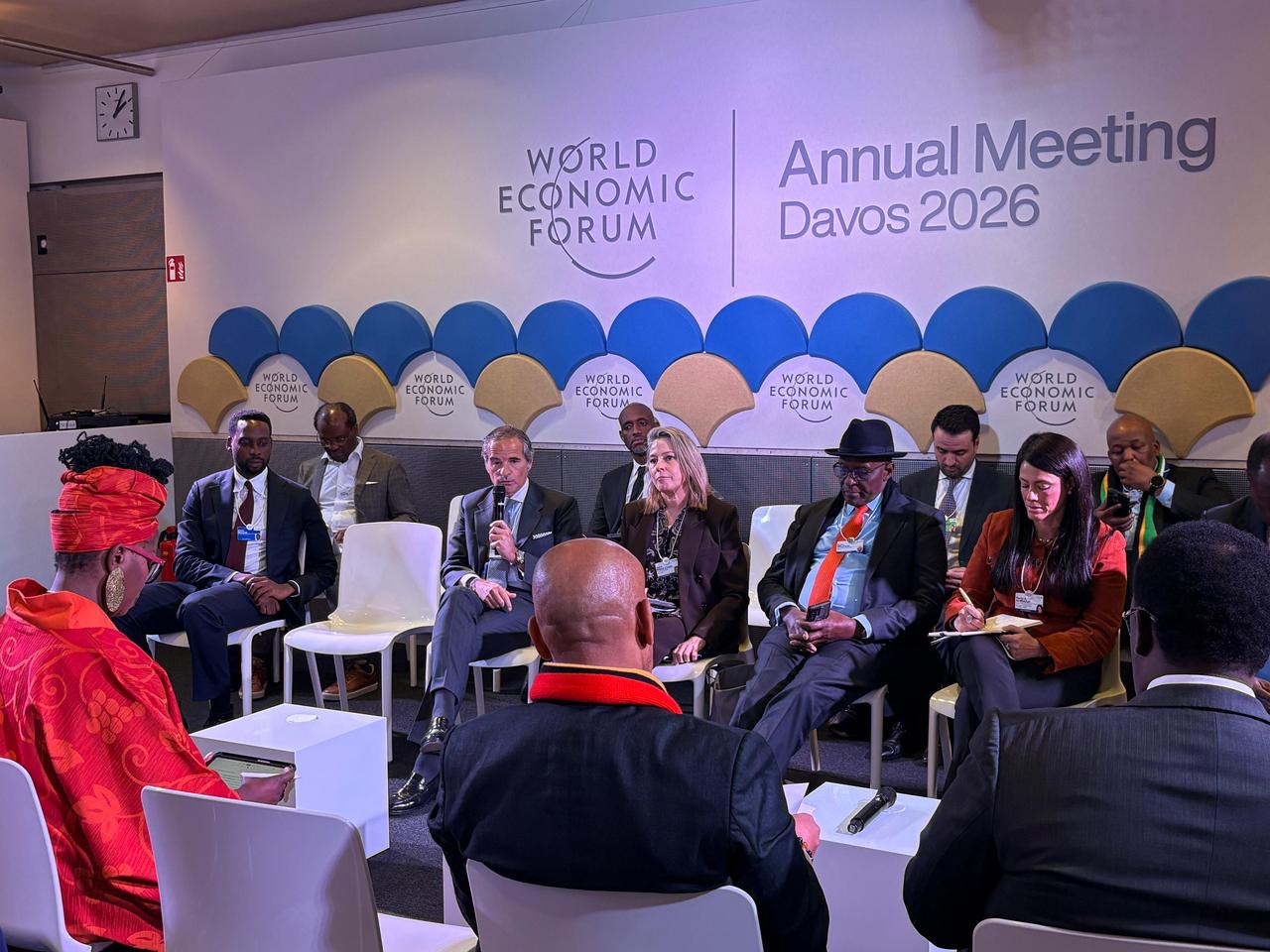
H.E. Dr. Rania Al-Mashat, Minister of Planning, Economic Development and International Cooperation, participated in a high-level session on nuclear energy in Africa, held as part of the activities of the Davos Forum 2026, to discuss the vital role of clean nuclear energy in supporting the continent’s ambitions for a just transition, and the importance of innovative financing and effective international cooperation to implement those ambitions.
The session was attended by Daniel Marokane, Group Chief Executive Officer of Eskom; Kgosientsho Ramokgopa, Minister of Electricity and Energy of South Africa; Wamkele Mene, Secretary-General of the African Continental Free Trade Area; Rafael Mariano Grossi, Director General of the International Atomic Energy Agency; as well as a number of African leaders, representatives of international institutions, and energy experts.
During the session, H.E. Dr. Rania Al-Mashat affirmed that nuclear energy is one of the clean, low-carbon energy sources and represents an important component of the sustainable energy mix, particularly in light of the increasing demand for electricity in African countries and the need for reliable, continuously operating energy sources, in a manner that supports both development and climate action objectives.
The Minister pointed out that Egypt adopts an integrated vision to diversify its energy sources, including expansion in renewable energy from solar, wind, and hydropower, alongside nuclear energy, in a way that enhances energy security and reduces reliance on fossil fuels. She stressed that such diversification constitutes a fundamental pillar for achieving economic and environmental sustainability, adding that Egypt’s Narrative for Comprehensive Development: Reforms for Growth, Jobs & Resilience aims to increase the contribution of renewable energy to 42% by 2030 and raise the contribution of the energy sector to GDP to 9.5%.
In this context, H.E. Dr. Rania Al-Mashat reviewed the El Dabaa Nuclear Power Plant project as one of the largest national development projects in Egypt and Africa, explaining that the project’s role is not limited to generating clean electricity, but extends to serving as a driver for economic growth and job creation, contributing to local community development, technology transfer, and the establishment of a supporting industrial and service base.
She added that the El Dabaa project embodies the concept of comprehensive development through its contribution to upgrading infrastructure efficiency, strengthening supply chains, and supporting energy-related industries, in addition to its expected role in providing a significant share of Egypt’s electricity needs upon operation, thereby enhancing grid stability and security of supply.
H.E. Dr. Rania Al-Mashat emphasized that regional and international cooperation represents a fundamental pillar for developing the nuclear energy sector in Africa, in addition to the need to strengthen efforts for experience exchange, partnership building, and benefiting from successful experiences, in a manner that ensures the use of nuclear energy as a tool for sustainable development and supporting the green transition path.
She stressed that the Egyptian experience, particularly through the El Dabaa project, offers a model that can be leveraged regionally, demonstrating how nuclear energy can be integrated into a balanced energy mix that supports economic growth, creates job opportunities, and contributes to achieving climate and sustainable development goals in Africa.