• Coordination between the German Agency for International Cooperation and the International Fund for Agricultural Development to multiply development impact and enhance the sustainability of interventions in the targeted governorates
• H.E. Dr. Rania Al-Mashat: Maximizing integration between the technical expertise of development partners to deliver effective contributions that support resilience in agricultural and rural communities
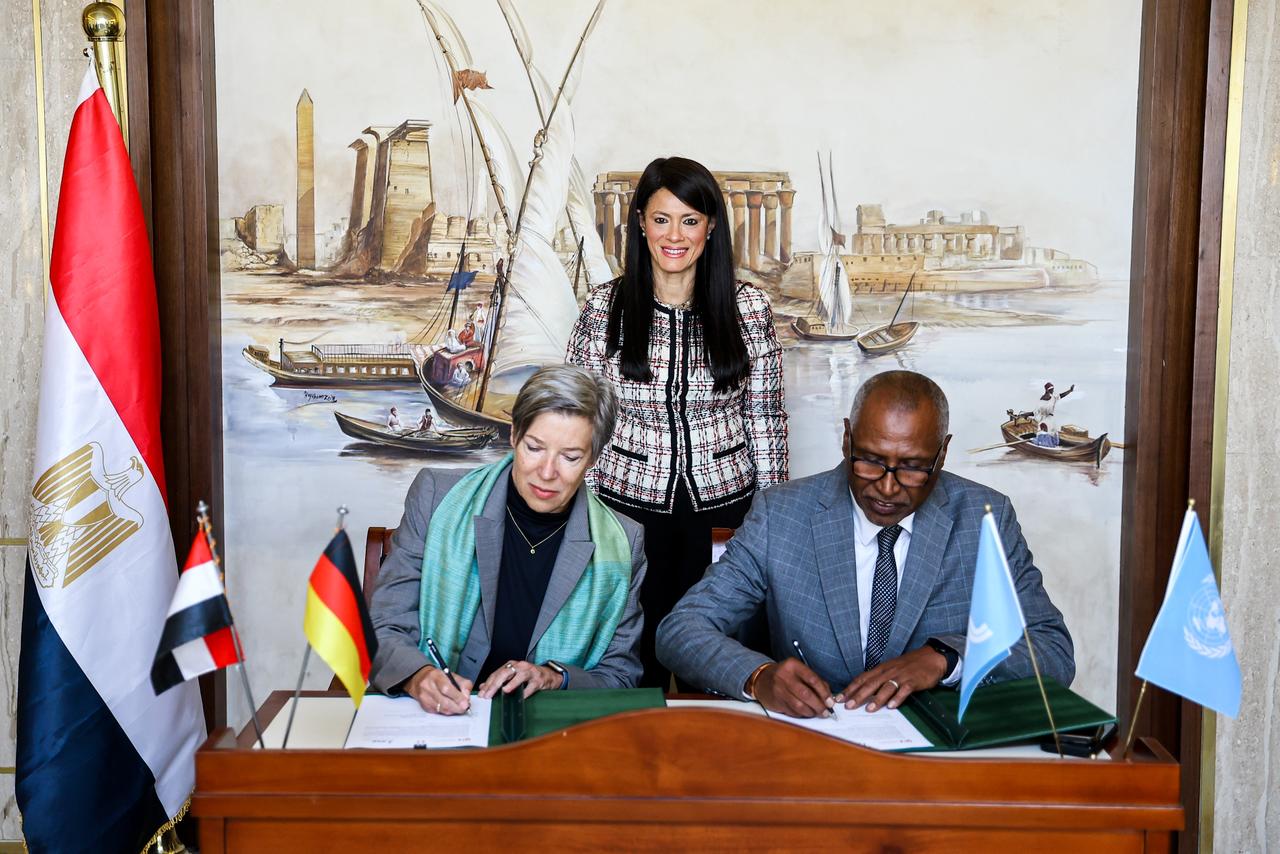
H.E. Dr. Rania Al-Mashat, Minister of Planning, Economic Development and International Cooperation, witnessed the signing of a Memorandum of Understanding between the German Agency for International Cooperation (GIZ) Egypt and the International Fund for Agricultural Development (IFAD) for technical cooperation to enhance agricultural and rural development and support resilience to climate change within the country platform of the “NWFE” Programme.
The Memorandum of Understanding was signed by Ms. Regine Qualmann, Country Director of the German Agency for International Cooperation (GIZ) Egypt, and Dr. Mohamed Abdelkader, Country Director and Head of the Multi-Country Regional Office of the International Fund for Agricultural Development (IFAD), in the presence of Mr. Holger Illi, Head of German Cooperation at the German Embassy in Cairo.
This comes within the framework of the role played by the Ministry of Planning, Economic Development and International Cooperation in strengthening relations with development partners to implement projects under the country platform of the “NWFE” Programme, across the energy, water, and food pillars. Through this cooperation, both sides intensify joint interventions within the framework of the “Climate-Resilient Water Management in the Nile Valley” (CROWN) project, the “Sustainable Transformation for Agricultural Resilience Enhancement in Upper Egypt” (STAR) project, and the “Agricultural Innovation Project” (AIB) implemented by the German Agency for International Cooperation.
Following the signing of the Memorandum of Understanding, H.E. Dr. Rania Al-Mashat stated: “This partnership reflects Egypt’s commitment to strengthening integration efforts among water, food, and energy projects, and underscores the importance of coordinating international cooperation efforts through aligning technical expertise with financing instruments, in a manner that enhances resilience to climate change, supports sustainable livelihoods, and maximizes development impact for rural communities, in line with Egypt’s Narrative for Comprehensive Development: Reforms for Growth, Jobs & Resilience, which goes beyond macroeconomic stability to place human development, social justice, and sustainable livelihoods at the core of economic transformation.”
H.E. Dr. Rania Al-Mashat commended the efforts of the International Fund for Agricultural Development as a key partner in the food pillar of the national “NWFE” country platform, in recognition of its prominent contributions to supporting sustainable rural development in Egypt. She also affirmed the close cooperation with the German Agency for International Cooperation and the ongoing efforts with the German side, particularly in implementing projects under the energy pillar of the “NWFE” Programme, stressing the importance of integrating the technical expertise of development partners to implement effective interventions that enhance resilience in agricultural and rural communities.
For his part, Mr. Holger Illi, Head of German Cooperation at the German Embassy in Cairo, said: “Germany was among the first supporters of the NWFE Programme in Egypt, with a strong focus on the energy pillar, and today strengthens this commitment by supporting food security and sustainable agriculture as essential elements of Egypt’s climate agenda and our strategic partnership for resilient and inclusive development.”
Dr. Regine Qualmann, Country Director of the German Agency for International Cooperation in Egypt, stated: “This Memorandum confirms GIZ’s role as a committed partner to the NWFE Programme in Egypt and highlights our contribution to adaptation and resilience-building efforts within the food and water pillars. By combining GIZ’s technical cooperation with IFAD’s financial strength, we aim to achieve sustainable impact for smallholder farmers and rural communities.”
Dr. Mohamed Abdelkader, Country Director of the International Fund for Agricultural Development, added: “This cooperation builds on a strong institutional foundation and a shared commitment to achieving rural transformation. The Memorandum of Understanding enables the scaling up of climate-resilient solutions, strengthening value chains, and improving the incomes of smallholder farmers.”
The agreement enhances on-the-ground coordination of technical cooperation between the German Agency for International Cooperation and the International Fund for Agricultural Development, thereby multiplying development impact and strengthening the sustainability of interventions in the targeted governorates. It also reflects Germany’s comprehensive support for Egypt’s “NWFE” agenda through linking adaptation and resilience-building efforts with continued support for mitigation efforts under the energy pillar. Through both technical and financial cooperation, including support provided through the German Development Bank (KfW), Germany continues to adopt a balanced approach that addresses climate change challenges and promotes inclusive and sustainable development.
In addition, the cooperation includes the application of environmentally friendly practices and innovative solutions to improve soil fertility, the use of improved plant varieties and modern farming methods, cooperation on enhancing digital solutions in the agricultural sector including digital literacy activities and the organization of digital competitions, as well as cooperation in marketing and market linkages through strengthening market connections, and other related objectives aimed at promoting comprehensive and climate-adaptive rural development, with a particular focus on empowering farmers’ organizations and enhancing financial literacy among smallholder farmers.